

FOR IMMEDIATE RELEASE — January 27, 2026
U Street ANC Deregulation Proposal Likely Accelerates Displacement in DC’s Black Neighborhoods
Washington, DC — Affordable housing advocates are raising alarm over a zoning deregulation resolution (attached) being advanced by U Street NW ANC Commissioners (ANC1B), warning that these proposed land use changes would likely accelerate displacement in predominantly Black neighborhoods in Wards 4, 5, 7, and 8, where nearly most of DC’s single-family–zoned land is located.
This controversial resolution would allow developers to demolish single-family homes and rebuild at higher density by-right, with no affordability requirements, no assurance of family-sized units, and the elimination of community-input without any displacement protections — it’s on the February 5, 2026 ANC 1B meeting agenda.
“My end goal is to have 1B pass this resolution first and then have at least one commission from each ward throughout the District of Columbia pass the resolution as well and send this to the Office of Planning … and so hopefully we can include this in the Comprehensive Plan that we really want to make by-right light-touch density central to our land use going forward,” said the proposing SMD 1B02 Commissioner, Francois Barrilleaux (August 18, 2025 ANC 1B Zoning Committee meeting)
ANC1B Would Not Be Affected By This Land Use Experiment
Critics warn the proposal would unleash speculative redevelopment in lower-cost neighborhoods, repeating patterns that have already displaced tens of thousands of Black Washingtonians over the past two decades during this time of rapid DC “growth” (US Census: 60,000 Black residents were displaced from the city between 2000 and 2020).
“What I’m looking at is cheaper land, and developers trying to take advantage of it—and now they want it as policy,” said Aaron Harris, Commissioner in ANC 7E, who was apprised of the draft proposal and spoke up at a recent ANC 1B Economic Development Committee meeting.
“If nothing else, I want [ANC 1B Commissioners] to at least look us in the eyes and tell us they’re going to do this regardless of the impact it’s going to have on us—while having no impact in the area it’s coming out of.”
While the proposal suggests its a response to “exclusionary zoning” in Ward 3, critics warn that market dynamics—not equity goals—would determine where redevelopment occurs, directing speculative investment foremost toward lower-cost neighborhoods thus placing more vulnerable neighborhoods in Wards 5, 7, and 8 at greatest risk from deregulation and displacement.
No-Strings Attached Land Speculation: Elimination of Community-Input
Despite months of committee meetings and associated public feedback, redline edits, and research shared by residents along with committee-level ANC commissioners, critics say few substantive changes have been incorporated into the latest draft of the resolution, if at all.
As written, the draft ANC1B resolution does not:
- Require family-sized or deeply affordable housing; Include anti-displacement protections; Address the racial and geographic impacts of citywide zoning deregulation.
- Affect any properties — zero areas — in ANC1B .
Deregulation Origin Story: Strange Bedfellows
The draft deregulation resolution borrows heavily from the recently published “Gentle Density” or “Light Touch” zoning policy framework promoted by Greater Greater Washington (GGW) and the American Enterprise Institute (AEI)—an unusual convergence of self-described progressive urbanists and hawkish-right free-market policy wonks.
The proposing ANC1B Commissioner, Francois Barrilleaux is an employee of AEI, whose board includes very wealthy figures playing major roles in national real estate development, finance, and private equity.
Recent FOIA documents also show regular collaboration between Barrilleaux and Alex Baca, Policy Director at GGW and Chair of the Ward 1 Democrats.
A Call for a Different Approach
Affordable housing advocates are urging ANC1B to reject this “experiment” in land use policy that will likely harm Black DC communities first, and instead prioritize policies that positively ensure housing stability without accelerating displacement, including:
- Expanded funding for the Emergency Rental Assistance Program (ERAP); Repeal of the RENTAL Act; Support for limited-equity cooperatives, community land trusts, and social housing on public land.
Advocates say the choice before ANC1B is clear: double down on speculative deregulation that has had debilitating results for longtime DC neighborhoods—or pursue housing solutions that keep longtime residents in their communities.
###
Press contact:
Debby Hanrahan, Save DC Public Land
debby@savedcpublicland.org
202-462-2054
RELEASE ADDENDUM
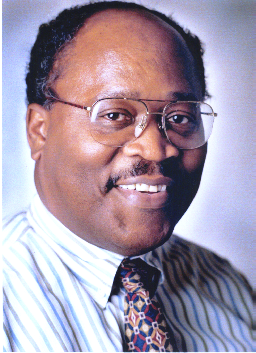
Colby King on Black Displacement from Washington D.C.
“The most destructive force to strike my native District of Columbia in my lifetime has been displacement: the forced removal of Black families and their community-binding activities and institutions from areas such as the Foggy Bottom and West End neighborhoods of Northwest D.C. and the southwest side of town. Displacement of thousands from places they had lived for generations to make room for new housing, better buildings and ultimately more affluent and privileged people.”
Opinion, “D.C. shoved Black neighborhoods aside. It’s still paying the price” by Colbert I. King, published in the Washington Post on January 19, 2024,https://archive.ph/5gxwK
The city’s “poor folk [are being forced] out of their neighborhoods” by the city’s “active role in development, selling or leasing publicly owned land, changing zoning laws, closing alleys and providing developers with inducements to construct new — or refurbish old — buildings … with resultant racial and class tensions.”
Opinion, “Quit the posturing in the Banneker-Shaw school dispute” by Colbert I. King on May 24, 2019 in the Washington Post,https://archive.ph/OSHig
“The city’s growing tax base of middle-class couples and singles makes D.C. Mayor Anthony Williams giddy. The sight of “undesirable” neighborhoods being rapidly transformed into places where wealthier folks want to live makes Williams go weak in the knees. These changes are just what the mayor, his economic planners and his business friends ordered. Besides, there’s no time for the displaced. The mayor’s too busy with the National League of Cities and, when he’s home, being wined and dined in glitzy downtown restaurants, Georgetown salons and the homes of folks he never thought he would meet when he was laboring as an Agriculture Department bureaucrat. The whole thing has turned his head. So what if booming property values and a richer downtown cultural life aren’t doing much for renters or the evicted?”
Opinion, “Turning a Deaf Ear to the Displaced” by Colby King dated January 8, 2005, published by the Washington Post, https://archive.ph/ps8ft#selection-949.33-949.846
Leave a Reply